
Jindal Steel Sets World Record with Steel Slag Road Construction
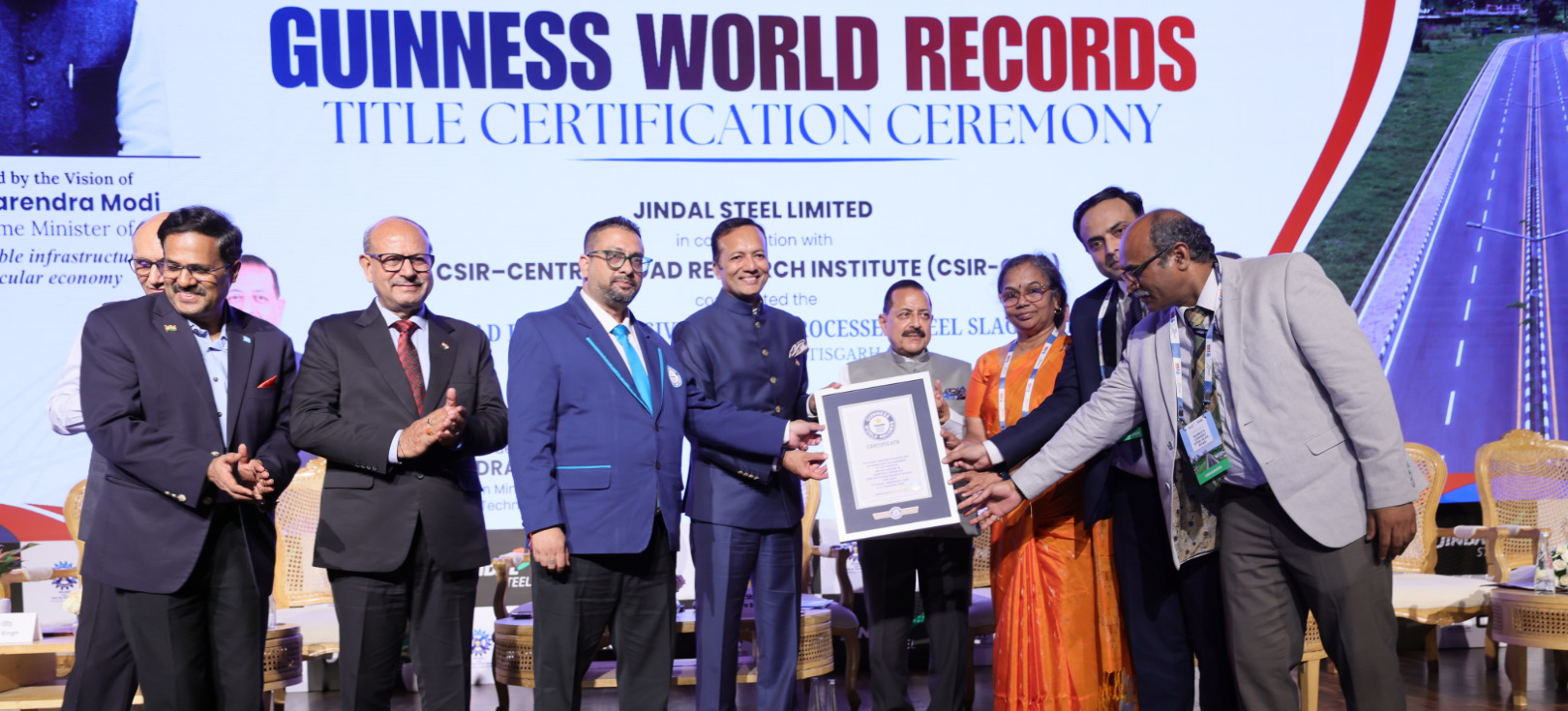
Jindal Steel has achieved a Guinness World Records title for constructing the world's longest road using exclusively processed steel slag aggregates, demonstrating the potential of steelmaking by-products as sustainable alternatives to conventional road construction materials.
The project, completed in collaboration with India's CSIR–Central Road Research Institute (CSIR-CRRI), involved the construction of a 1.85-kilometre, four-lane road in Raigarh, Chhattisgarh, using approximately 200,000 tonnes of processed electric arc furnace (EAF) steel slag.
Announced in September 2026, the project represents a significant milestone in the beneficial reuse of steelmaking by-products, with processed slag replacing 100% of natural aggregates throughout the pavement structure.
Transforming Steel Slag into Road Infrastructure
The road was designed to accommodate heavy commercial traffic, with a pavement loading capacity of 65 million standard axle repetitions.
To ensure the material met the required engineering and environmental standards, the steel slag underwent extensive processing, including controlled ageing, stabilisation, metal recovery, crushing, screening and grading.
The processed material was subsequently subjected to physical, mechanical, geotechnical and environmental testing before being incorporated into the road's formation, granular and bituminous layers.
Through this approach, the project eliminated the need for approximately 200,000 tonnes of virgin stone aggregates, reducing reliance on natural quarrying resources.
Delivering Environmental and Economic Benefits
In addition to reducing demand for natural aggregates, the project demonstrated significant opportunities to improve the efficiency and cost-effectiveness of road construction.
According to Jindal Steel, the engineered slag pavement design was approximately 35% thinner than conventional alternatives, with estimated construction cost savings of up to 40%.
These outcomes highlight the potential for appropriately processed steel slag to provide a durable and economically viable alternative to traditional road construction materials.
The project also demonstrates how industrial by-products can be transformed into valuable construction resources, supporting circular economy principles and reducing the volume of materials requiring disposal.
Supporting Wider Industry Adoption
Following the project's success, Jindal Steel introduced SteelGrit, a branded range of processed steel slag aggregates developed for use in construction applications.
The company also signed a technology transfer agreement with CSIR-CRRI to support broader adoption of the processing technology beyond the Raigarh project.
The agreement represents an important step towards commercialising steel slag-based construction materials and expanding their use across future infrastructure projects.
Demonstrating the Potential of Steelmaking By-Products
The Raigarh project provides an international example of how steel slag can be successfully incorporated into major road infrastructure when supported by appropriate processing, engineering design and quality assurance.
For the Australian iron and steel slag industry, the achievement reinforces the opportunities to expand the beneficial reuse of steelmaking by-products in road construction and other civil infrastructure applications.
As the construction sector continues to pursue more resource-efficient materials, projects such as this demonstrate the potential for steel slag to reduce dependence on virgin aggregates while delivering practical engineering and economic benefits.
Source: Jindal Steel Limited, Jindal Steel Builds World's Longest Steel Slag Road, Sets Guinness World Record, 14 September 2026.


Comments
There are no comments.